


Wildlife on the Kenai Peninsula
Your Alaska fishing trip is as much a wildlife experience as it is a fishing one. The Kenai Peninsula is one of the most wildlife-dense regions of Alaska. Here is what to expect — and how to stay safe.
Brown & Black Bears
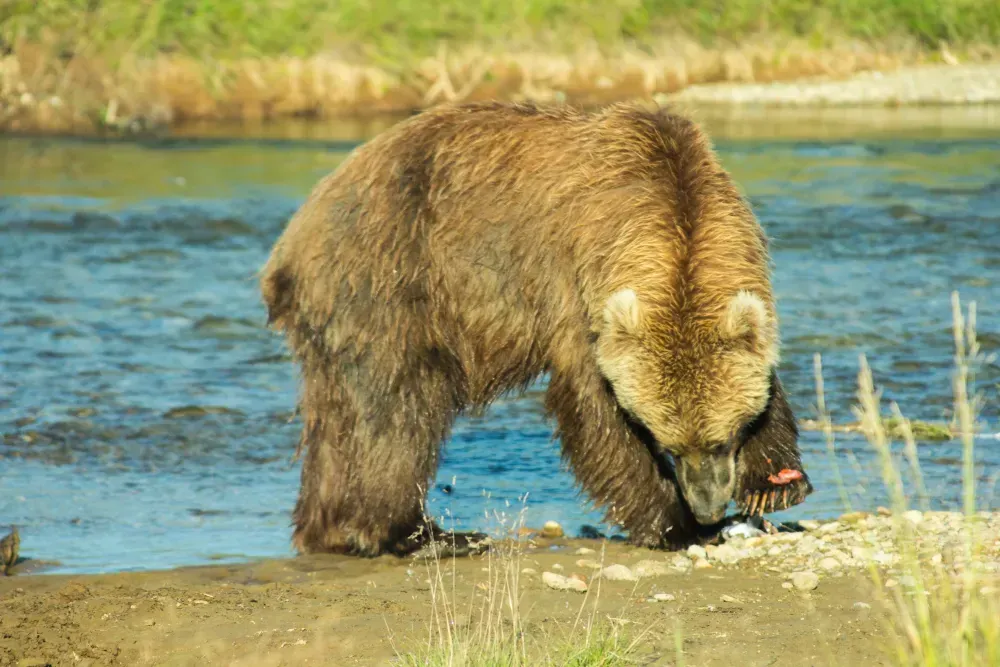
Brown and black bears congregate along Kenai Peninsula rivers during the salmon runs — particularly July through September. Watching a brown bear fish in the same hole you are targeting is an unforgettable Alaska moment. Bears are generally habituated to people near riverbanks, but always maintain distance and carry bear spray.
Bald Eagles
Bald Eagles are so common on the Kenai that most anglers stop noticing them by day two. During salmon runs, they perch in riverside spruce trees watching for an easy meal. You will see multiple eagles on any given guided trip — often swooping down to steal dying salmon from the shallows.
Moose
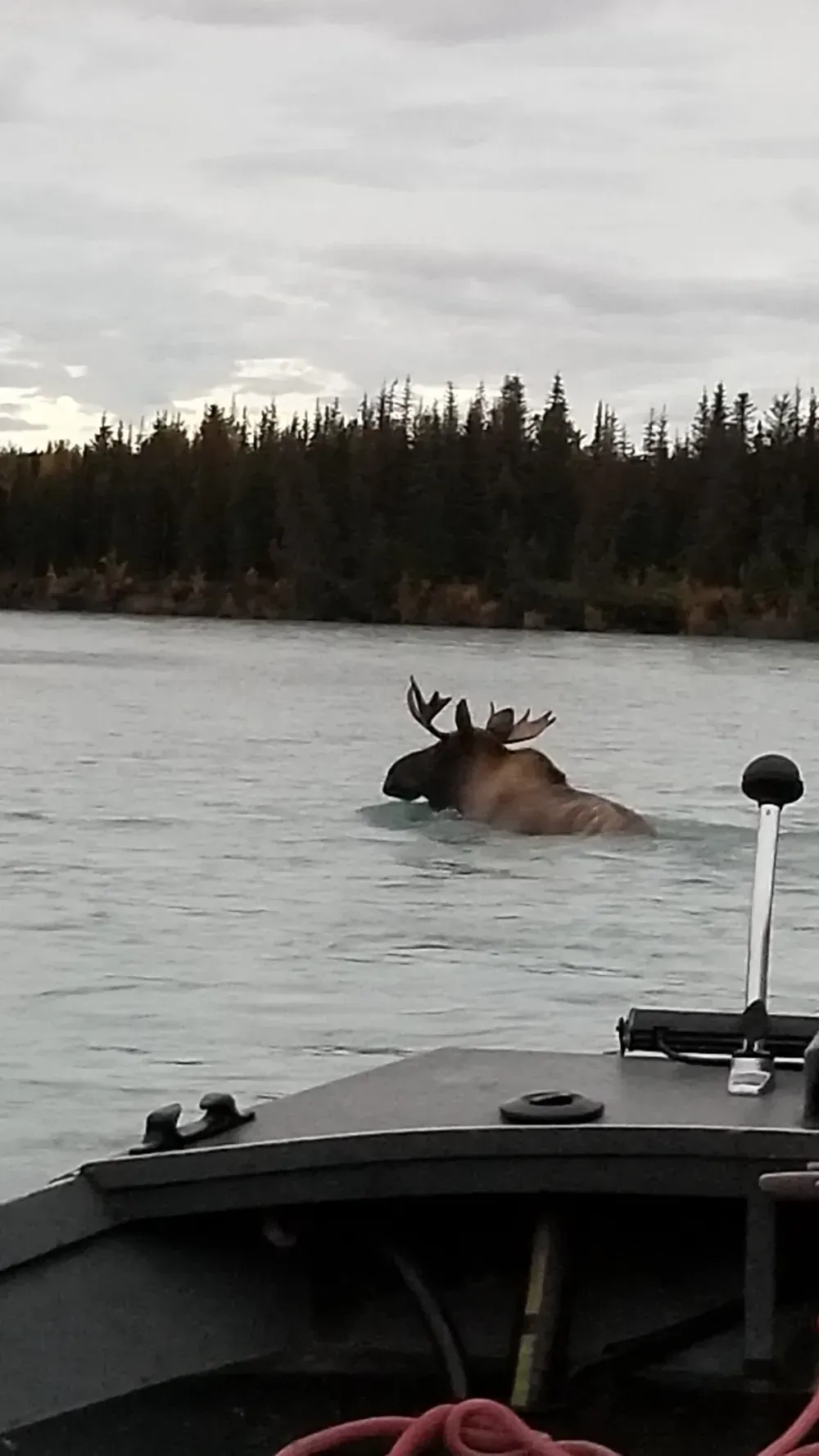
Moose are the largest land mammal in North America and the Kenai Peninsula has one of the highest moose densities in Alaska. You are extremely likely to spot moose feeding in riparian vegetation along the river. Cows with calves in May–June require extra distance — a cow moose is significantly more dangerous than a bear when protecting a calf.
Beluga Whales
Upper Cook Inlet is summer feeding grounds for a unique population of Cook Inlet beluga whales. From the Kenai River mouth and the beaches near Nikiski, beluga whales can often be spotted chasing salmon schools right into the shallows. A rare and spectacular sight.
River Otters
River otters are extremely common along the Kenai River system and are often seen swimming alongside drift boats. They're curious, playful, and not at all shy. Our guides enjoy watching clients' reactions when an otter surfaces two feet from the boat.
Dall Sheep
While not seen on the river, Dall Sheep are commonly spotted on the cliffs along the Seward Highway between Anchorage and the Kenai Peninsula — particularly at Windy Point and Bird Creek. Pull over safely to view them.
🐻 Bear Safety on the River
- • Carry bear spray and know how to use it
- • Never approach a bear — maintain 100+ yards distance
- • If a bear approaches you, stand your ground, speak calmly, and deploy spray if it comes within 30 feet
- • Never run — it triggers a predatory chase response
- • Cut your fishing line if a bear is near your catch — don't fight over a fish
- • Never leave fish or bait unattended on the bank
- • Bears near rivers during salmon runs are in a feeding frenzy — give them extra space
- • Our guides carry bear spray and are trained in bear encounter protocols
Experience Alaska's Wildlife from a Drift Boat
Floating the Kasilof River silently in a drift boat gets you closer to wildlife than any other approach. No motor noise — just the river, the birds, and whatever appears around the next bend.
Kasilof Drift Boat Trips